This time, what varies is the power to which the complex number z is raised to in each iteration.
The standard Mandelbrot Set is iterated as follows:
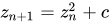
However, in this simulation (link here), we define the algorithm as follows:
z(n+1) = z(n)^k + c, where k is a real number.
The value of k can be adjusted with either the slider, which allows the values to be set between 1 and 10, or with the field provided, which allows for any real value of k to be entered. This set is also called the Multibrot Set, as a portmanteau of "Multiple" and "Mandelbrot".
Disclaimer: Due to the colouring algorithm used, selecting negative powers will end up merely returning a monotone page of colour. We are currently working on implementing a better colouring algorithm for all our Mandelbrot Set simulations so that they can be viewed in their infinite majesty.
The default value of k is set to k = 10, and the set is as follows:
 |
| Fractal for k = 10 |
 |
| Zoomed-in fractal for k = 10, a fascinating structure emerges |
The other values of k produce interesting shapes as well, for instance, let k = 6:
 |
| Fractal for k = 6 |
This comment has been removed by a blog administrator.
ReplyDelete